One command, connected tools, and contextual execution. TenseAi transforms fragmented AI usage into a single intelligent ecosystem for modern professionals.
Recoillife Editorial
Automation Research
Mar 12, 2026
4 min read
"We used to open five tabs, switch three apps, and lose two hours for one task. TenseAi turned that chaos into one simple prompt."
Customer story
In a world where AI tools are scattered everywhere, TenseAi introduces a connected model. It is not another isolated chatbot. It is an ecosystem where your intent, tools, and outputs are wired together through contextual automation. You ask. TenseAi executes.
What is TenseAi?
TenseAi is a contextual aware wired robotic process automation platform. It combines natural language interaction, cross-tool task execution, and content generation in one place. Instead of manually orchestrating apps, you describe the outcome and TenseAi handles the workflow.
Link Tools: One AI Across Your Apps
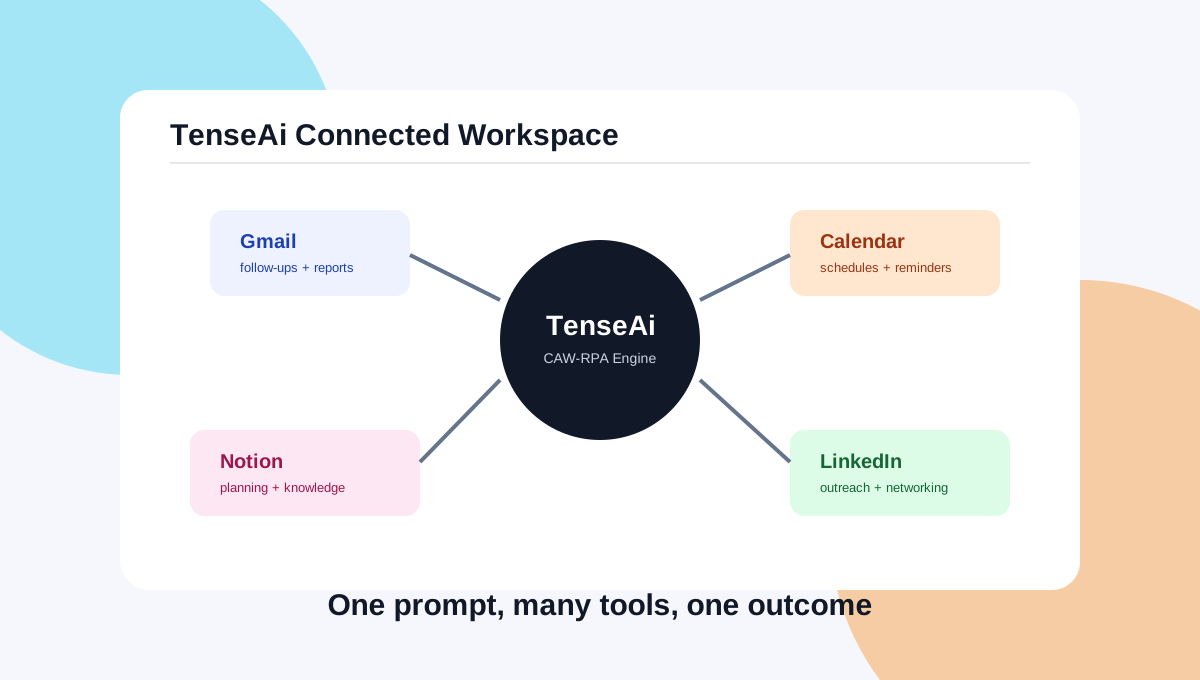
Professionals lose time switching between Gmail, Calendar, Meet, Drive, Notion, LinkedIn, and Sheets. Link Tools connects those environments so tasks move automatically without copy-paste operations or brittle manual handoffs.
No API scripting required for everyday business workflows.
No third-party orchestration setup needed for common actions.
One prompt can trigger multi-app execution with status visibility.
Thinks: Your Invisible Assistant
Thinks works as a silent copilot during meetings and conversations. It reads tone and context, suggests responses, generates summaries, and recommends next actions in real time. You stay present in the conversation while the assistant handles synthesis.
CAW-RPA: Automation That Understands Intent
Traditional automation executes fixed instructions. CAW-RPA interprets intent and context. This allows TenseAi to adapt workflows based on data changes, user behavior, and business goals instead of only static rules.
A single automation layer across communication, planning, and execution tools.
The result is simple: one platform, one command, and significantly less operational friction. TenseAi is built for teams that want AI to execute, not just suggest.
What Chat-Driven Automation Looks Like in Real Teams
In practical use, chat-driven automation means a team member types one clear instruction and TenseAi handles multiple connected actions. Instead of creating one output, then manually moving context to another tool, each workflow can continue from the previous step automatically. This removes delay, reduces mistakes, and keeps everyone aligned on the same execution trail.
Marketing: draft campaign copy, schedule launch review, and publish status updates.
Sales: prepare lead brief, generate outreach draft, and set a follow-up reminder.
Operations: summarize meetings, create action items, and notify owners automatically.
Founder workflows: prepare weekly updates and distribute them across channels in one flow.
From Commands to Reliable Systems
The most important shift is not speed alone. It is reliability. Teams can save high-performing prompts as repeatable execution patterns, then reuse them with minor context changes. Over time, this creates an operating system of trusted automations where quality improves with each iteration instead of resetting every day.
Start with one recurring workflow that consumes daily team time.
Turn the workflow into a single intent-focused command.
Review outputs for tone, accuracy, and execution completeness.
Save and share the refined command as a team template.
Measure turnaround, quality, and missed-follow-up reduction.
Why This Model Scales Better Than Fragmented Tool Stacks
Fragmented stacks create hidden tax: training overhead, inconsistent process quality, and poor traceability. A chat-driven model centralizes intent and execution in one place. Teams can see what was requested, what was executed, and where results were delivered. This visibility makes operations auditable and easier to improve over time.
Less rework from context loss between apps.
Faster onboarding using saved workflow templates.
Clearer accountability through execution logs and outputs.
Higher consistency across team communication and deliverables.